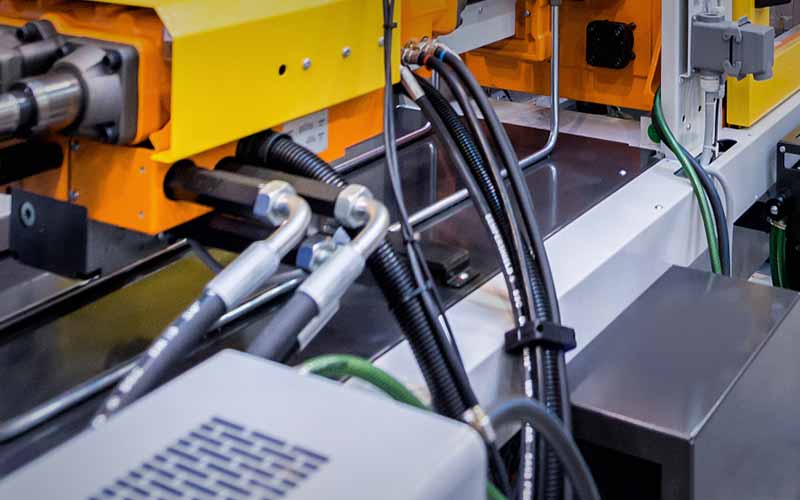
Injection molding is a method of melting plastic material and injecting it into a cavity to form a certain shape. Once the melted plastic enters the mold, it is cooled and formed into a certain shape. The obtained shape is often the finished product and does not require further processing before installation or use as the final product. Many details, such as protrusions, ribs, and threads, can be formed in a single injection molding operation.
an injection device for melting plastic and injecting it into the mold, and a clamping device for closing the mold under injection pressure.
The function of the clamping device is:
1. Close the mold under injection pressure;
2. Extract the product from the injection device, melt it before injecting it into the mold, and then control the pressure and speed to inject the melt into the mold.
Currently, there are two designs of injection devices used for TPO thermoplastic: a screw-type pre-plasticizer or two-stage device, and a reciprocating screw. The screw-type pre-plasticizer uses a pre-plasticizing screw to inject molten plastic into the injection rod.
The advantages of screw pre-plasticizer are constant melt quality, high pressure and speed, and injection volume control. These advantages are required for transparent, thin-walled products and high production rates. Its disadvantages include uneven residence time, higher equipment costs, and maintenance and repair costs.
The commonly used reciprocating screw injection device does not require a plunger to melt and inject the plastic.
Extrusion blow molding is a method of manufacturing hollow thermoplastic components. Well-known blow molding objects include bottles, barrels, cans, boxes, and containers for packaging food, drinks, cosmetics, medicines, and daily necessities. Large blow-molded containers are usually used for packaging chemical products, lubricants, and bulk materials. Other blow-molded products include balls, corrugated tubes, and toys.
For the automotive manufacturing industry, blow-molded fuel tanks, car shock absorbers, seat backs, center brackets, and armrest and headrest covers are all blow-molded. For the machinery and furniture manufacturing industries, blow-molded parts include housings, door frames, brackets, ceramic jars, or open-faced boxes.
The common blow molding and extrusion materials are high-density polyethylene, and most milk bottles are made of this polymer. Other polyolefins are also commonly processed by blow molding.
According to their uses, polystyrene polymer, polyvinyl chloride, polyester, polyurethane, polycarbonate, and other thermoplastic plastics can also be blow-molded.
Engineering plastics are widely accepted in the automotive industry. Material selection is based on mechanical strength, weather resistance, electrical